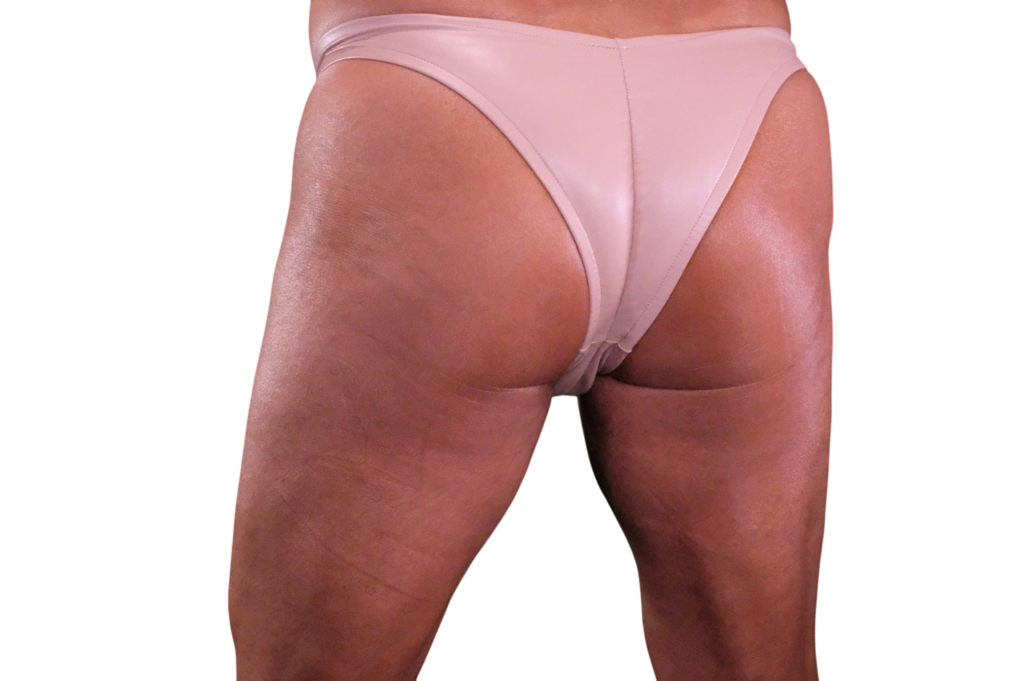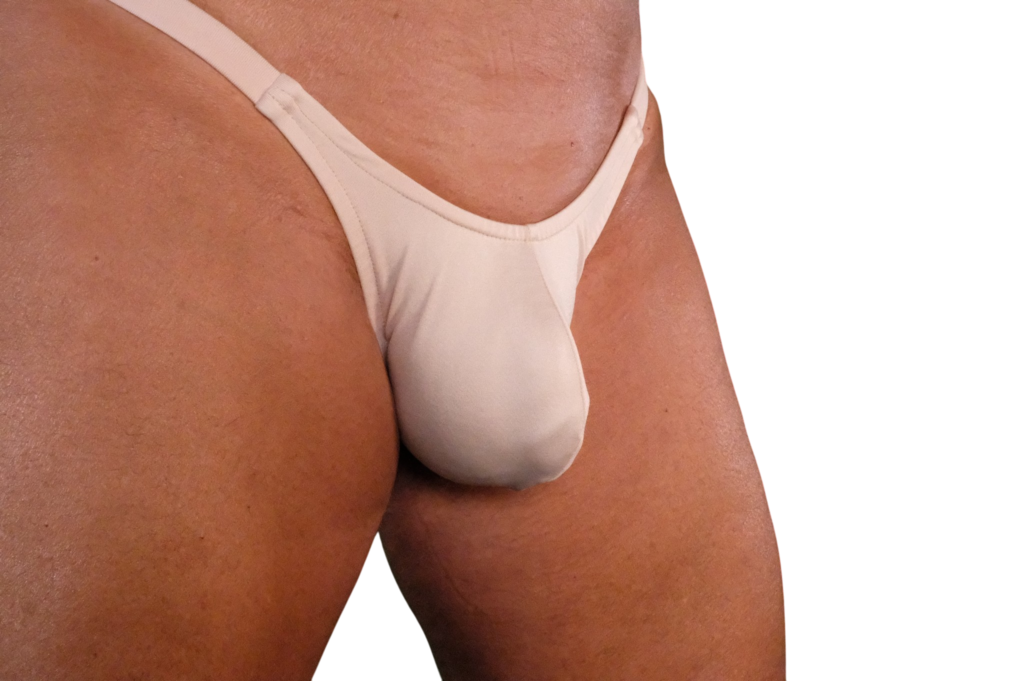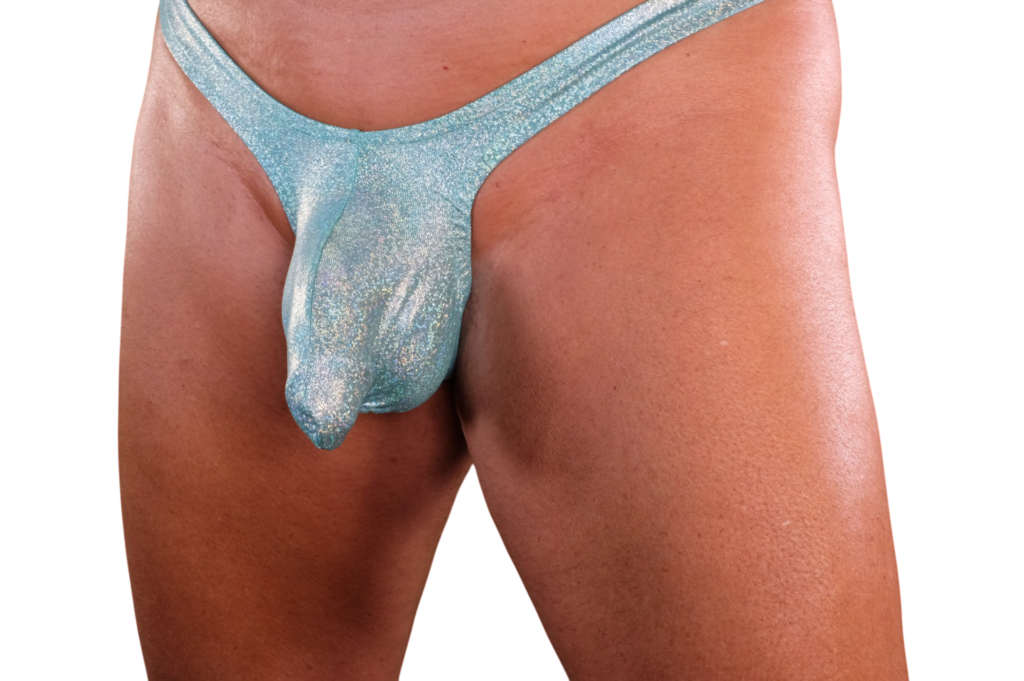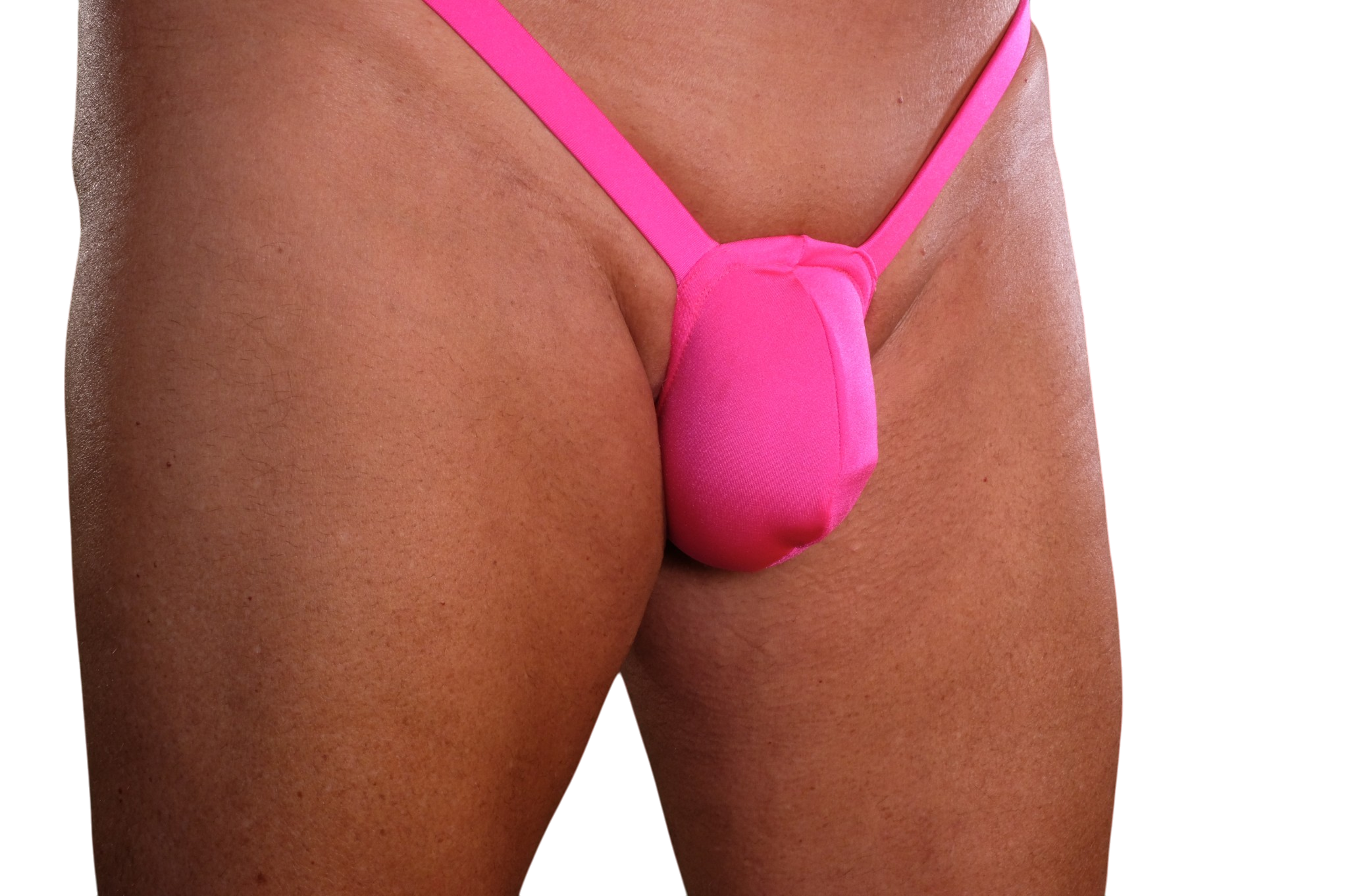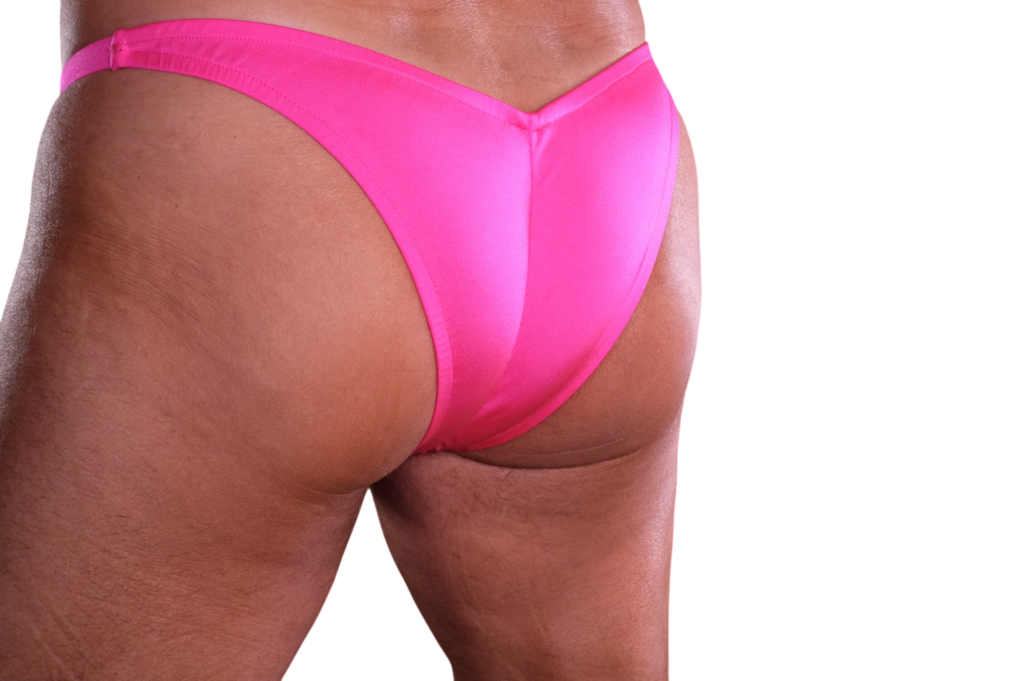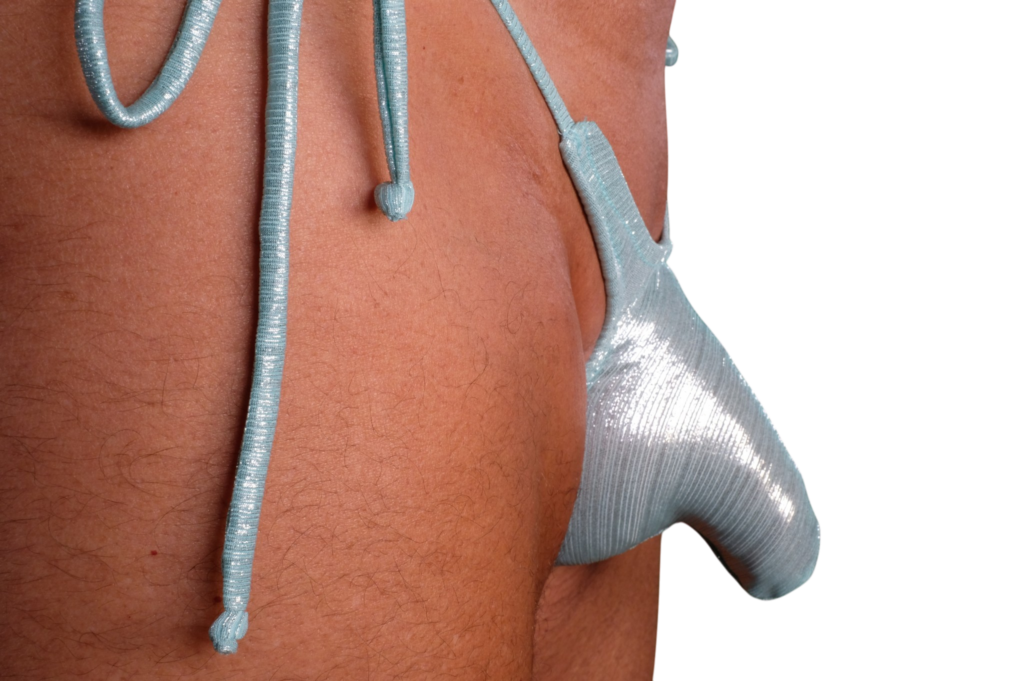
Men’s Spandex and the Penis Issue: Getting Comfortable with the Natural Male Outline
Spandex has transformed men’s fashion. What was once associated primarily with competitive swimmers, cyclists, wrestlers, dancers, and athletes has expanded into everyday fitness clothing, leggings, compression wear, swimwear, bodysuits, running tights, bikinis, thongs, and increasingly adventurous men’s fashions.
But spandex presents men with one issue that loose clothing largely eliminates:
Spandex shows the shape of the body underneath it.
For men, that includes the penis and testicles.
That simple reality can create considerable anxiety for someone wearing form-fitting clothing for the first time. A man accustomed to board shorts, loose gym shorts, or relaxed-fit pants may suddenly look in the mirror wearing a spandex swimsuit or leggings and think, Everyone can see my outline.
Yes, they may be able to see an anatomical outline.
But that does not automatically make the garment inappropriate.
It means the fabric is doing exactly what spandex is designed to do: following the contours of the human body.
The “Penis Issue” With Men’s Spandex
There is a strange contradiction surrounding men’s clothing.
Society readily accepts clothing that reveals the overall shape of almost every part of the body. Athletic shirts show shoulders and chests. Running tights reveal legs and buttocks. Swim briefs show hips. Compression garments reveal nearly everything about someone’s physique.
Yet many men become nervous when the same fabric reveals the natural shape of their genital area.
This anxiety is one reason some men avoid spandex altogether.
They are not necessarily uncomfortable with the garment. They are uncomfortable with what the garment reveals about their anatomy.
That attitude is gradually changing.
As men’s swimwear and athletic clothing become smaller and more form-fitting, more men are realizing that having a visible anatomical contour beneath clothing is simply part of wearing close-fitting clothing.
Spandex Doesn’t Create the Shape
This is perhaps the most important concept for someone new to tight-fitting clothing.
Spandex isn’t creating anything that isn’t already there.
It is simply following the body.
A penis has shape. Testicles have shape. Hips have shape. Buttocks have shape. Breasts have shape. The pubic area has shape.
Stretch fabrics naturally reveal some of those contours.
The degree depends on the garment’s fabric weight, compression, construction, lining, seams, color, pouch design, and fit.
A heavily lined compression garment can substantially reduce definition. A lightweight single-layer swimsuit can reveal considerably more.
Neither approach is inherently wrong. They simply create different aesthetics.
We Already Accept Body Contours in Women’s Spandex
One reason men’s attitudes may continue changing is that society has had decades to become accustomed to women’s form-fitting clothing.
Women’s leggings, yoga pants, swimsuits, athletic wear, leotards, cycling clothing, and bodysuits routinely follow the natural contours of the breasts, buttocks, hips, and pubic area.
Depending on the garment, some anatomical contours may be noticeable.
Most people don’t interpret the existence of those contours as inherently sexual. They understand that there is a human body underneath stretchy fabric.
The same principle can apply to men.
A man’s genital anatomy creates a contour beneath tight clothing because that anatomy exists.
There is an important difference between a garment naturally revealing the shape of the body and deliberately behaving sexually in public.
Simply wearing properly covering spandex is not the same thing as sexual conduct.
The Male Bulge Has Become More Visible
Men’s athletic and swimwear has become increasingly body-conscious.
Consider competitive swim briefs.
For generations, swimmers and divers have competed in front of enormous audiences wearing extremely form-fitting swimwear. Cycling shorts and wrestling singlets similarly make little attempt to disguise the basic male anatomy.
Running tights and compression leggings have expanded that visibility even further.
Meanwhile, men’s recreational swimwear has diversified enormously. Instead of choosing only between trunks and board shorts, men can now choose swim briefs, bikinis, Brazilian cuts, thongs, G-strings, micro swimsuits, square cuts, compression shorts, and numerous other designs.
As these styles become familiar, seeing the male body beneath them becomes more familiar too.
Why First-Time Wearers Feel So Exposed
Your first experience wearing tight spandex in public can feel dramatically different from your hundredth.
At home, you might love the appearance.
Then you walk toward the beach or gym and suddenly become intensely conscious of your crotch.
You may think everyone is looking.
This reaction isn’t unique to genital contours. People experience similar self-consciousness when first wearing shorts that are much shorter than usual, a sleeveless shirt, a bikini, leggings, or any garment revealing more of their physique than they’re accustomed to displaying.
The brain notices the difference and exaggerates its importance.
Repeated exposure often changes that.
After wearing spandex several times, many people stop constantly thinking about what the fabric reveals.
It simply becomes clothing.
Some Men Love the Body-Conscious Look
Not everyone needs convincing.
Plenty of men specifically choose spandex because they like clothing that follows their body.
They may enjoy seeing their legs, buttocks, waist, chest, and yes, genital contour reflected accurately by the garment.
That doesn’t necessarily mean they are attempting to sexually attract everyone around them.
People frequently choose clothing because they enjoy how they look in it.
A muscular man might enjoy a fitted shirt because it shows his chest and arms. Someone who has worked hard on their legs may enjoy running tights. A man wearing a fitted swimsuit may simply appreciate the complete body-conscious aesthetic.
Spandex offers something loose clothing cannot: it allows the shape of the person to become part of the garment’s appearance.
Other Men Want Less Definition
There is equally nothing wrong with preferring a smoother front.
Modern men’s spandex provides enormous flexibility in this area.
Some garments have supportive pouches that organize the anatomy into a conventional male silhouette. Compression designs can minimize movement and reduce definition. Liners and thicker fabrics can soften contours further.
There are also flat-front, minimizing, gender-neutral, and gender-affirming designs intended to reduce the appearance of the male bulge significantly.
Consequently, wearing spandex does not require accepting one particular genital presentation.
Men can decide how much definition they are comfortable displaying.
Pouch Design Makes an Enormous Difference
Two spandex swimsuits with nearly identical dimensions can look completely different because of their pouch construction.
A contoured pouch creates room for the penis and testicles and generally produces a more pronounced male silhouette.
A compression pouch holds everything closer to the body.
A flat-front design can reduce forward projection further.
Lining can soften anatomical details while an unlined garment tends to follow the body more precisely.
This means men experimenting with spandex shouldn’t assume their reaction to one garment represents how they will feel about every spandex garment.
Try different constructions.
You might dislike a highly contoured pouch but love compression. Another man may find compression uncomfortable and strongly prefer an anatomical pouch.
Penis Size Doesn’t Determine Whether You Can Wear Spandex
Another common concern involves size.
Some men worry they are too large for revealing spandex. Others worry they are too small.
Neither concern needs to determine whether someone wears it.
A naturally larger bulge will generally look larger in form-fitting clothing. A smaller penis may create a smaller profile.
Both are normal.
The purpose of clothing doesn’t have to be creating the illusion that every man’s body has identical proportions.
Modern body-positive fashion increasingly recognizes that people have different chest sizes, waistlines, hips, legs, breasts, buttocks, and genital anatomy.
Spandex simply makes some of those differences more visible.
Getting Comfortable Takes Exposure
For men who like spandex but remain nervous about displaying a natural outline, gradual exposure can help tremendously.
Start with thicker compression shorts or leggings.
Wear them around the house.
Then wear them underneath shorts.
Next, try them for exercise somewhere you feel comfortable.
Move into conventional running tights, cycling clothing, or swim briefs.
As your comfort increases, you can experiment with thinner fabrics, smaller swimsuits, or more body-conscious designs if those styles appeal to you.
The objective isn’t forcing yourself to wear something uncomfortable.
It is giving yourself enough experience to distinguish between “I genuinely don’t like this” and “I’m simply not accustomed to seeing myself dressed this way.”
Those feelings can initially seem identical.
The Mirror Test Can Be Misleading
People examining themselves in tight clothing often stand inches from a mirror and scrutinize details that nobody would normally observe from that distance.
Step back.
Look at the entire outfit.
That tiny seam, fold, or anatomical contour that seemed enormous from two feet away may become an ordinary part of the garment from a normal conversational distance.
This is especially important with spandex because the wearer already knows exactly where everything is underneath the fabric.
Other people generally see the complete person first.
Context Still Matters
Normalizing the male body does not mean every garment is appropriate everywhere.
A swimsuit appropriate for an adult beach may not comply with a particular pool’s dress code. Athletic tights appropriate for running may not suit every workplace. Extremely sheer garments introduce different considerations from ordinary opaque spandex.
The useful standard is not:
“Can anyone tell that I have a penis?”
A better question is:
“Does this garment provide appropriate coverage for where I’m wearing it?”
If an opaque garment adequately covers the body and complies with the rules of the setting, the mere existence of a natural anatomical contour underneath it shouldn’t automatically be treated as a wardrobe malfunction.
Men’s Fashion Is Catching Up
Women’s fashion went through decades of cultural adjustment as bikinis became smaller, leggings became everyday clothing, and body-conscious athletic wear moved outside the gym.
Men’s fashion is experiencing its own version of that transition.
Board shorts aren’t disappearing. Neither are loose gym shorts.
But they are no longer the only socially recognizable choices.
Men are increasingly discovering swim briefs, bikinis, thongs, compression tights, leggings, running tights, bodysuits, and other spandex garments that allow considerably more of the body’s natural shape to remain visible.
The more frequently people see these fashions, the less remarkable they become.
Familiarity creates normalization.
A Body Under Fabric Is Still a Body
Ultimately, the “penis issue” surrounding men’s spandex is largely about becoming comfortable with the basic reality of anatomy.
Men have penises.
Women have breasts and external contours associated with their anatomy.
People have buttocks, hips, thighs, stomachs, muscles, curves, and countless other physical features.
Stretch fabric follows those features.
We have become accustomed to seeing many female body contours through form-fitting clothing without automatically treating the wearer as indecent. Men’s anatomy deserves the same ordinary, non-alarmist perspective.
There is a difference between nudity and anatomical contour.
There is also a difference between sexual behavior and simply possessing a body.
Understanding those distinctions makes men’s spandex considerably easier to approach.
Wear the Spandex, Not the Anxiety
For someone wearing men’s spandex for the first time, the biggest obstacle often isn’t the swimsuit, leggings, or compression shorts.
It’s the voice saying:
“Everyone can see that I have a penis.”
Of course you have one.
People already know that male bodies have anatomy underneath their clothing.
The goal doesn’t have to be pretending otherwise.
If you prefer a smooth or minimized appearance, there are plenty of spandex designs capable of providing it. If you prefer a naturally contoured pouch, that is another legitimate style. If you like a more prominent body-conscious silhouette, men’s fashion increasingly offers that choice as well.
What matters is finding a level of coverage and definition that works for you and for the setting.
As men become increasingly comfortable with bikinis, swim briefs, leggings, thongs, compression clothing, and other form-fitting fashions, the male outline will probably become progressively less noteworthy.
Eventually, that may be the biggest change of all.
Instead of seeing a man in spandex and thinking about the fact that his anatomy has a visible shape, people simply see a man wearing spandex.
And that is exactly how normal fashion trends are created: something initially feels daring, people see it repeatedly, more people try it, and eventually everyone wonders why it ever seemed unusual.